
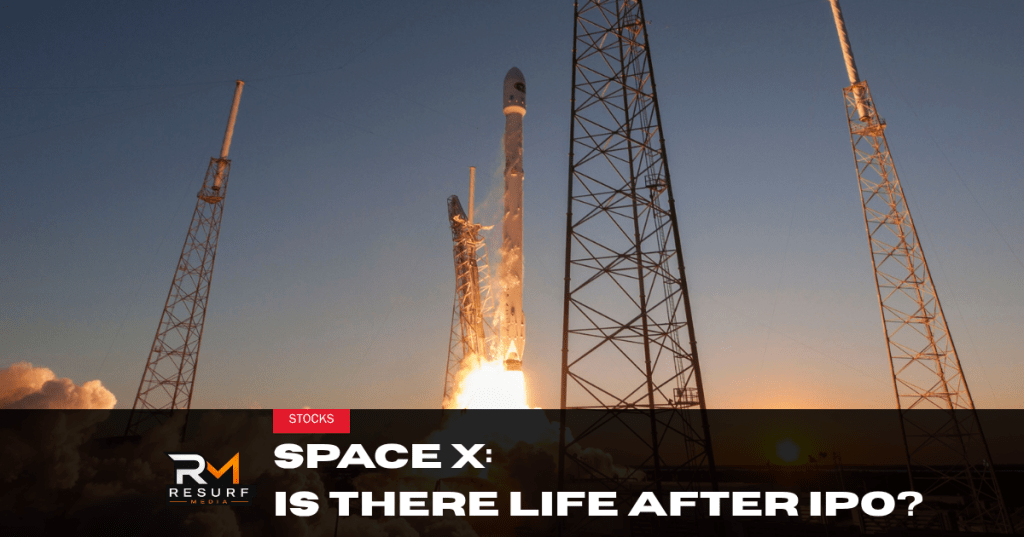
SpaceX Shares Settle Into Volatile Orbit After Historic IPO
Just weeks after pulling off the largest initial public offering in history, SpaceX’s shares are trading well above their offering price but far below the euphoria-driven peaks of their debut, as investors grapple with sky-high expectations for Elon Musk’s space empire.
The company, officially known as Space Exploration Technologies Corp., priced its Nasdaq debut at $135 per share on June 11, raising approximately $75 billion and entering public markets with a valuation near $1.77–1.8 trillion. Trading under the ticker SPCX, shares opened strongly and surged intraday to highs near $225, briefly pushing the market capitalization toward $3 trillion before pulling back on profit-taking.
As of late June 2026, the stock has traded in the $150–$165 range, closing recently around $156 – still up roughly 15% from the IPO price but reflecting a sharp cooldown from its early highs.
Revenue Growth vs. Lofty Valuation
SpaceX reported about $18.7 billion in 2025 revenue, driven largely by its Starlink satellite internet service, government launch contracts, and growing contributions from AI-related infrastructure. The company remains unprofitable on a GAAP basis, posting net losses amid heavy investments in Starship development and data centers.
At current trading levels, the stock commands a price-to-sales multiple well above 100x trailing revenue – a premium that has drawn both admiration and skepticism on Wall Street.Morningstar analysts, for instance, argue the company is significantly overvalued. Their discounted cash flow model pegs fair value near $780 billion – less than half the IPO valuation – citing execution risks, capital intensity, and questions around the monetization of ambitious AI and Mars-related projects.
Analyst Divide: Bulls Bet on the Long Game
Other voices are more optimistic. Some analysts project revenue could nearly double in 2026 and continue strong growth into 2027, fueled by Starlink subscriber expansion and Starship’s potential to slash launch costs. Consensus 12-month price targets cluster around $165–$190, with bullish forecasts reaching $227 or higher in optimistic scenarios.
Bulls highlight SpaceX’s near-monopoly on reusable heavy-lift launches, Starlink’s rapid global rollout, and Musk’s track record of turning vision into revenue. “No comparable public company operates at scale across launch, broadband, and AI,” noted one analyst maintaining an Outperform rating with a $190 target.
What’s Next for SPCX
Near-term catalysts include upcoming quarterly earnings, Starlink subscriber metrics, and progress on Starship test flights. Longer term, success in securing major government contracts, international broadband expansion, and AI infrastructure monetization could justify premium valuations. However, risks abound: regulatory scrutiny, high cash burn, competition in satellite services, and the eventual expiration of insider lockup periods that could flood the market with additional shares.
For now, SpaceX’s public life mirrors the drama of its rocket launches – dramatic ascents, sharp corrections, and plenty of attention. Whether the stock can sustain its orbit will depend on translating Musk’s ambitious roadmap into consistent financial delivery.
This article is for informational purposes only and does not constitute investment advice. Stock prices are subject to significant volatility.
 Resurf Media
Leave a comment